Posted by:
Post Date:
2026.08.03
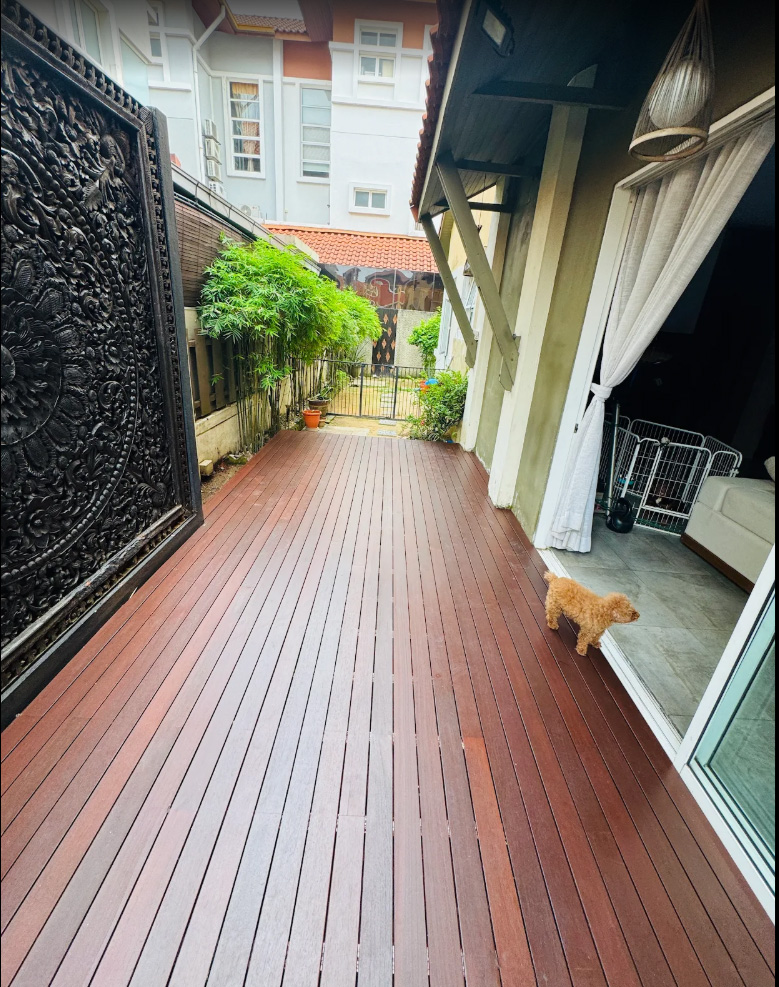 An outdoor timber deck transforms a garden patio, pool fringe, or private terrace into a natural, luxurious extension of your living space. However, building an outdoor deck in Malaysia presents unique environmental challenges. Under intense tropical sun and heavy monsoon downpours, exterior timber undergoes continuous cycles of rapid heating, wetting, and drying. When planning an installation, homeowners often weigh whether boards should be secured using modern hidden bracket systems or traditional top-face screwing. While face-screwing was common in legacy builds, timber specialists and engineering-led installers consistently advocate for hidden bracket methods. The reason goes far beyond sleek aesthetics; it comes down to preventing water traps, eliminating fungal entry points, and protecting the long-term structural integrity of your investment.
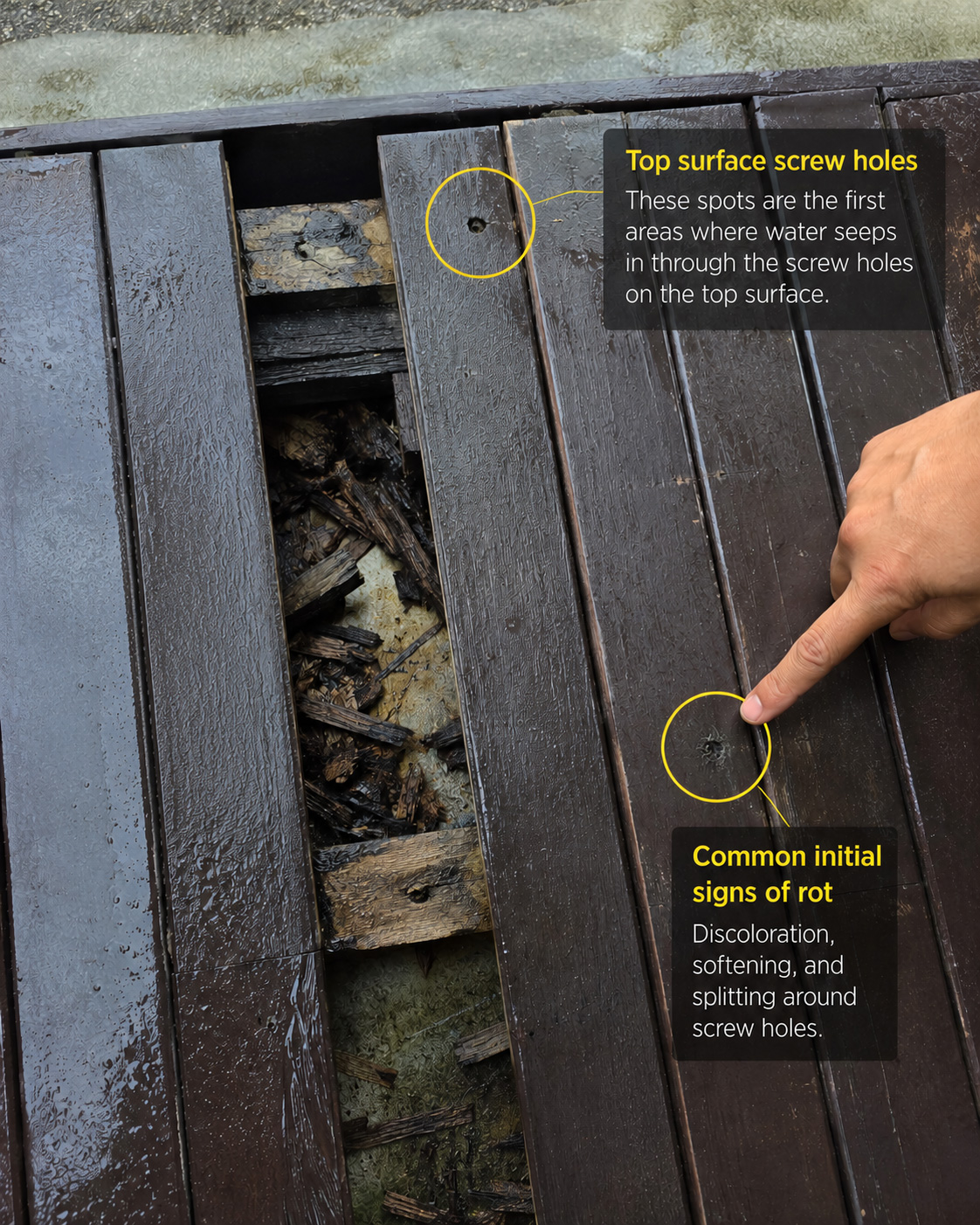
The most significant flaw of top-face screwing is the physical damage it inflicts on the surface of the timber. Every face screw driven into a deck board punctures the factory-sealed upper face, severing natural wood fibers and creating a permanent vertical channel. In Malaysia's high-rainfall climate, these penetrations turn into miniature reservoirs for standing rainwater. Even when screws are meticulously countersunk, the tiny recess around the fastener head forms a basin where water settles rather than evaporating. This trapped moisture creates an ideal breeding ground for fungal spores and wood-decay organisms, gradually rotting the core of the board from the inside out. Over successive rainy seasons and scorching afternoons, the natural swelling and contraction around the screw hole causes the timber to check and split, turning a tiny puncture into an unsightly, water-damaged crater that cannot be easily repaired.
Hidden bracket systems solve this fundamental vulnerability by anchoring deck boards entirely from the side grooves or from underneath. Because the upper face of the timber remains completely unbroken, rainwater beads naturally and runs off into designated drainage channels without penetrating the board's interior core. Without surface holes to trap water, the timber dries rapidly after heavy downpours, neutralizing the primary catalyst for rot and structural decay.
 Beyond preserving the wood against rot, hidden brackets deliver an uninterrupted, resort-style aesthetic that showcases the natural grain of premium species like Teak, Belian, Merbau and Chengal. Homeowners, children, and pets can walk barefoot across the deck with total peace of mind, completely free from the hazard of snagging on raised screw heads, rusted metal, or localized surface splinters. When it comes time to apply protective decking oils or UV sealers, an unbroken surface allows for a smooth, uniform protective coat, preventing the premature peeling and flaking that typically begins around countersunk screw holes.
While some homeowners worry that hidden clips might not hold dense tropical hardwoods as securely, timber stability is actually governed by proper board profiling, precise joist spacing, adequate sub-deck cross-ventilation, and professional kiln-drying. When engineered correctly with precision-milled side grooves and heavy-duty, stainless steel brackets, hidden systems provide unyielding hold-down retention while allowing the wood fibers to breathe and expand naturally under tropical humidity swings.
An outdoor timber deck should enhance your lifestyle for decades without becoming a maintenance headache. While traditional face-screwing might seem like a quick, conventional shortcut, the long-term price of surface rot, expanding screw holes, and premature board replacement makes it an outdated practice. Opting for a professional hidden bracket system preserves the seamless beauty of your hardwood, defends the wood against water-driven decay, and ensures an elegant, durable outdoor living space for years to come.
Back